
How to build the perfect focus soundscape (rain + lofi is just the start)
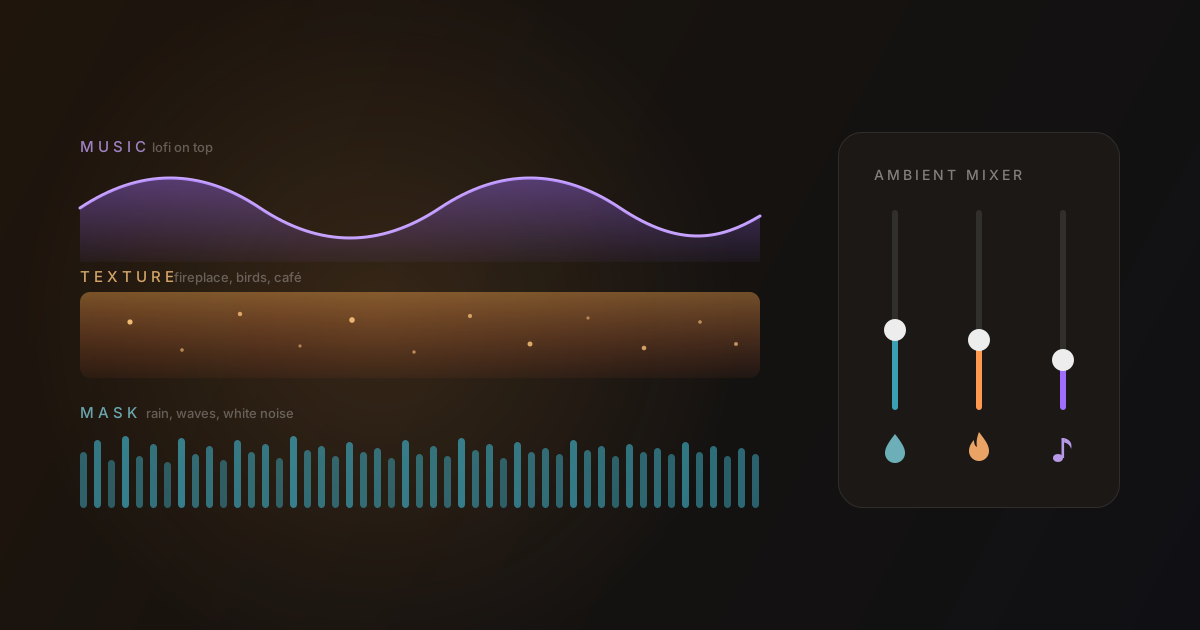
Music alone is only half of a good focus environment. The other half is the bed underneath it — the steady ambient layer that masks hallway chatter, keyboard clacks from the next desk, and the silence between tracks where distractions sneak back in. Getting that layer right is a small craft. Here’s how to do it well.
The three roles in any soundscape
A soundscape that works for hours has three layers, each doing a different job:
- The mask — broadband, steady, featureless. Rain, white noise, waves, a river. Its job is to raise the noise floor so sudden sounds (doors, notifications, speech) stop cutting through. This is the layer doing the actual acoustic work.
- The texture — warm, irregular but predictably irregular. Fireplace crackle, distant birds, café murmur. Its job is psychological: it makes the mask feel like a place instead of a laboratory. Pure white noise works but feels clinical after an hour; a fireplace is white-ish noise your brain reads as cozy.
- The music — melody and rhythm on top. Lofi is ideal here because it’s instrumental, mid-tempo, and dynamically flat, so it adds mood without adding surprises.
Most people’s mistake is running only layer 3. Music has gaps — between tracks, in sparse intros — and every gap is a hole in your acoustic wall.
Mixing rules that actually matter
- Set the mask first, music last. Start with rain (or waves, or a river) at the lowest level that blurs out the specific sounds bothering you. Then bring music in under it feeling like it’s coming from the next room. If you set the music first, you’ll push everything too loud.
- Total volume: just above the room. The whole soundscape should sit barely above your environment’s noise floor. If a colleague talks to you and you miss the first word, you’re too loud. Loud masking fatigues you; you’ll feel it at 3 p.m.
- One mask, one texture. Rain + fireplace works. Rain + waves + river + white noise is mud — overlapping broadband sources just sum into hiss. Pick one wide source and one character source.
- Match the texture to the task. Café murmur suits shallow work — email, admin — where a little social energy helps. For deep work, murmur can flirt with the speech problem; rain and fire are safer. Birds are great for morning starts and terrible for late-night lock-in.
- Change scenes, not volume. When a soundscape stops working, your instinct is to turn it up. Don’t — switch textures instead. Novelty resets the effect; volume just adds fatigue.
Three recipes to steal
- Deep work in a noisy office: rain at 40%, lofi at 25%. Rain is the best all-purpose mask there is — broadband enough to blur speech, familiar enough to disappear.
- Cozy evening session: fireplace at 35%, slow lofi at 30%. Fire crackle has almost no high-frequency energy, so it masks less but soothes more — right trade for a quiet room.
- Anxious, can’t settle: waves at 45%, no music for the first twenty minutes, then lofi at 20%. Slow rhythmic sounds are the closest thing ambient audio has to a breathing exercise.
Doing this without five browser tabs
You can assemble all of this manually — a rain video here, a fireplace stream there, a playlist on top — but now you’re managing three volume sliders across three tabs, and none of it survives a reboot.
This is exactly why we built the ambient mixer in Lofi Space. Each scene comes with a curated lofi stream, and the mixer lets you layer Rain, Fireplace, Birds, Waves, River, or White Noise under it, each with its own level — then save the blend as a custom soundscape you can bring back with one click from the macOS menu bar. The mixer is part of Pro (a one-time $4.99, not a subscription), and the scenes themselves are free.
However you build it: mask first, one texture, quieter than you think. Your 3 p.m. self will thank you.