
A simple deep work routine built on lofi and the Pomodoro technique
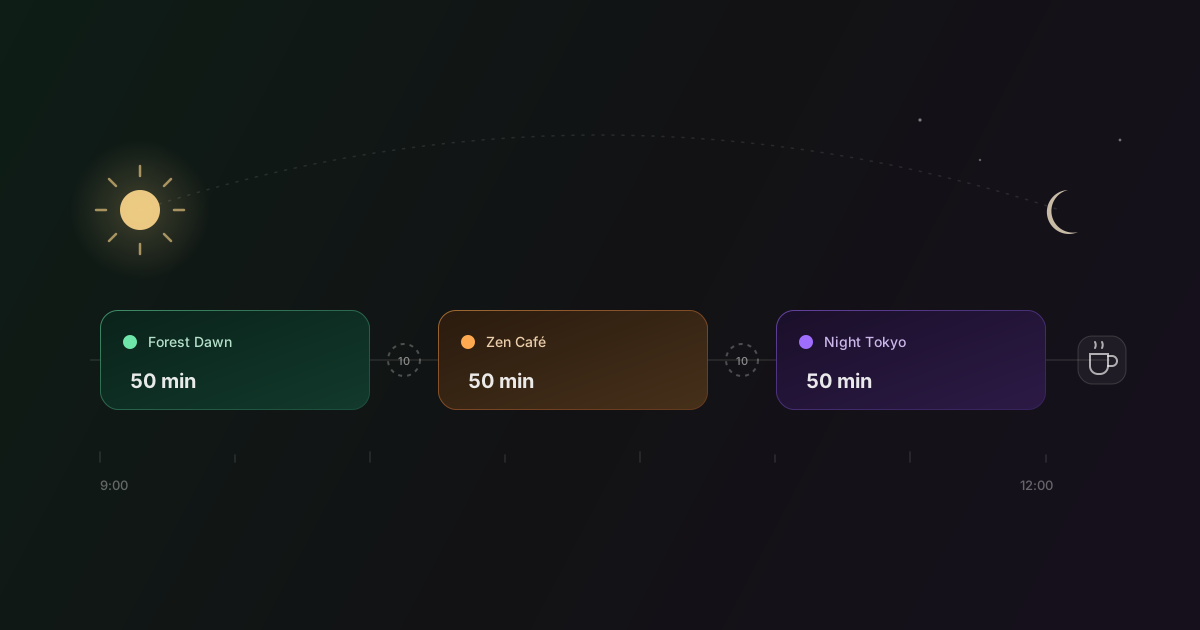
Focus routines fail for a boring reason: too many decisions. What to work on, for how long, with what music, at what volume — every choice is a chance to fiddle instead of start. The fix is to decide once and reuse the decision. Here’s a complete lofi-plus-Pomodoro routine you can run tomorrow morning, with all the choices pre-made.
The skeleton: 50/10, three rounds
Classic Pomodoro is 25 minutes on, 5 off. That’s great for tasks you dread, but too choppy for programming, writing, or design, where the first ten minutes are just loading the problem into your head. For deep work, run the longer variant:
- 50 minutes on, 10 minutes off, three rounds in a morning block.
- After three rounds, take a real break — 30 minutes minimum, food involved.
Three clean rounds is 2.5 hours of actual deep work, which is more than most office days contain. Don’t be greedy; be repeatable.
Give each round a sound
Here’s the trick that makes the music pull its weight: use a different scene per round, and always the same ones in the same order. The soundtrack becomes a progress bar you can feel. In Lofi Space terms:
- Round 1 — Forest Dawn. Bright, gentle, morning-coded. Layer Birds low under it if your room is dead quiet.
- Round 2 — Zen Café. A bit more energy for the middle round, when the novelty of the morning has worn off.
- Round 3 — Night Tokyo. Darker and steadier, for grinding out the last round. Rain underneath, low.
After a week or two the association calcifies: Forest Dawn starts playing and your brain knows it’s round one. That’s classical conditioning doing free work for you. (Why instrumental, mid-tempo music helps at all is its own post — short version: no lyrics, no surprises.)
The rules during a round
- Music starts when the round starts, stops when it stops. The play button is the timer’s starting gun. One click in the menu bar, then hands off the controls — no skipping, no volume fiddling. If a track annoys you, let it pass; it’s three to five minutes long.
- Silence means break. Pausing the music at the end of a round is the signal to actually stand up. If the music keeps going, you’ll keep half-working, and half-working is how breaks die.
- Notifications off, music on — same gesture. Turn on Do Not Disturb when you press play. Pairing the two makes each one remind you of the other.
The rules during a break
- Stand up. Look at something more than six meters away. Water.
- No feeds. A ten-minute break that opens a feed is not a break; it’s a context switch with extra steps. The whole point of the silence is to make the break feel different from the round.
- Don’t start the next round late. The 10 minutes ends and Forest Dawn — or whatever round two’s sound is — starts. The routine only compounds if the edges stay sharp.
Handling the interruptions you can’t refuse
Meetings and calls will land in the middle of your block. The routine survives if re-entry is cheap: when the call ends, restart the round you were in — don’t “finish the partial one.” A round is a unit; partial units rot the system.
This is honestly why auto-pause is my favorite thing we’ve built into Lofi Space: when a meeting app starts using audio, the music pauses itself, and when the call ends it resumes — so the interruption doesn’t cost you the ritual, and you’re back in the round without touching anything. (It uses macOS’s metadata-only audio APIs — no microphone access.)
Steal it, then stop tweaking it
Copy this routine exactly for two weeks before changing anything. The specific scenes don’t matter; the consistency does. The music is scaffolding — decided once, always the same, one click away — so the only decision left each morning is the one that matters: what to build in round one.